
Geotechnical reporting
From factual Ground Investigation Reports to the ground model your design team takes forward.
Ground Investigation Report
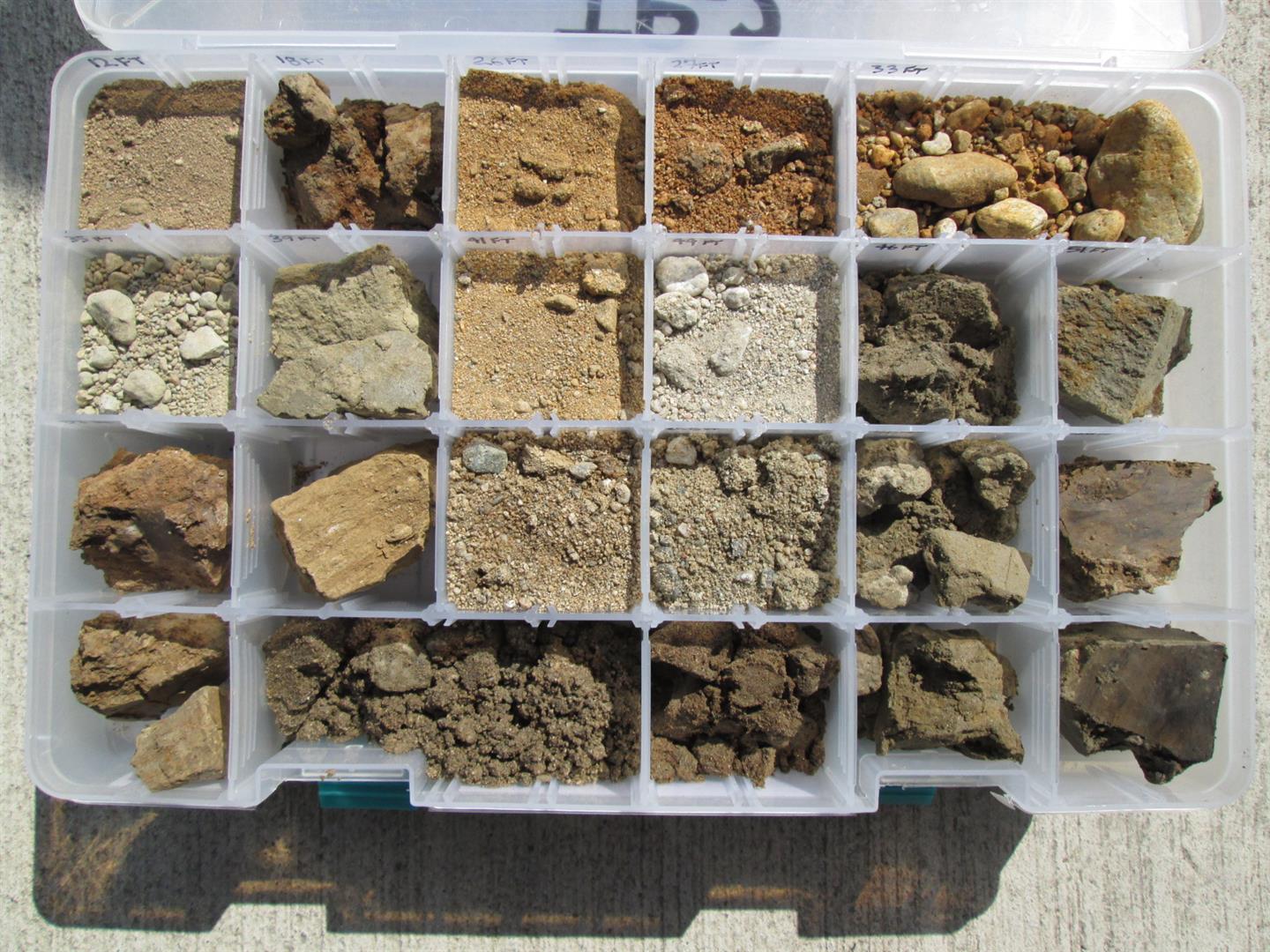
We provide a Ground Investigation Report (GIR) as defined in Eurocode 7. It outlines the scope and methods of investigation, identifies any constraints and presents the intrusive results and the field and laboratory test data.
The strata encountered are described in accordance with BS5930:2015 or other codes as required. Groundwater observations and level measurements are also included. Our staff are highly trained to understand the ground from geological, geotechnical and environmental aspects.
Interpretative report
A geotechnical interpretative report is the vital link between the factual investigation and laboratory data and the analyses performed during geotechnical design. It can be viewed as an enhanced GIR, with invaluable information for consulting and structural engineers and the wider design team.
The ground sequence is described and a ‘ground model’ identifies appropriate parameters to take into the design. We identify the geotechnical risks and the types of foundation appropriate for the proposed structure, including innovative techniques that might not ordinarily be considered. Where specific risks such as clay desiccation, chalk dissolution and mining are identified, we suggest mitigation and any targeted additional investigation.
Every report is peer-reviewed
Our reports are all peer-reviewed by a Chartered Geologist, Chartered Engineer and/or Registered Ground Engineering Professional with at least 25 years’ experience.
Ground Movement Analysis (GMA)
Clients often need to demonstrate the effect of their development on adjacent properties and infrastructure. Movements can be caused by demolition of existing buildings, basement excavation and new foundation loadings.
We estimate ground movements using in-house software or commercially available programs such as PDISP. GMA reports include contour drawings of movement beneath structures within and adjacent to the site and, if required, a Damage Assessment.
Basement Impact Assessment (BIA)
An increasing number of projects include basements beneath existing homes, and many boroughs, particularly in London, now require a formal BIA to determine how excavation and construction will affect adjacent properties, infrastructure and the groundwater regime.
The method was originally set by the London Borough of Camden and has since been mirrored by many local authorities. We provide full BIA reports, from screening and scoping through to impact assessment, which often includes the GMA results.